Medical Weight Loss vs. Losing Weight on Your Own: What’s the Difference?
Global Obesity Group
A multidisciplinary team of specialists in Bogotá with extensive experience in medical weight loss, overweight and obesity management, nutrition, behavioral support, and bariatric and metabolic surgery. This content is for educational purposes and does not replace a personalized medical evaluation.
If you’ve tried diets, calorie-tracking apps, workout plans, fasting, or advice you found online—and still feel like weight loss is harder than it should be, you’re not alone in that experience. At Global Obesity Group, we see every day that medical weight loss starts with a simple but important idea: weight loss is not simply a matter of willpower. Your metabolism, medical history, eating patterns, sleep, medications, emotional health, daily routine, and previous weight-loss attempts can all influence how your body responds.
That is why we approach weight management differently. Instead of starting with a generic diet or another one-size-fits-all solution, we start by understanding the person in front of us. Losing weight on your own can leave you trying to interpret every plateau or setback by yourself, while professional weight loss support gives you a team that can evaluate what is happening, adjust the strategy, and help you work toward sustainable weight loss. So, what really changes when you stop trying to figure it all out alone and start working with a professional team?
You Don’t Have to Figure It Out Alone
If you’ve tried different diets, routines, or weight-loss methods without finding something that truly fits you, we can help you understand what may be getting in the way and build a plan around your health, needs, and goals.
What Is Medical Weight Loss and How Does It Work?
At Global Obesity Group, we understand medical weight loss as a structured approach to weight management in which clinical decisions are based on the person—not simply on a number on the scale. It does not mean automatically prescribing medication, nor does it refer to one specific diet or treatment. A medical weight loss program begins by understanding what may be influencing your weight and then determining which strategies may be appropriate for your health, needs, and goals.
Fat Loss Treatment: Understanding Your Options for Long-Term Weight Loss Written by Global Obesity Group

Cirugía bariátrica: ¿en qué consiste y qué cambia realmente en tu cuerpo? Contenido escrito por

Weight Loss Tips for Women: 10 Practical Ways to Build a Healthier Approach Content written
Una Solución a la Obesidad

Medical Weight Loss Is More Than Following Another Diet
When people think about losing weight, the first recommendations they often hear are familiar: eat fewer calories, follow a meal plan, exercise more, or eliminate certain foods. Those changes may be useful in some situations, but medical weight management asks an important question first: what factors are influencing this person’s weight in the first place?
That means looking beyond calories alone. Medical conditions, medications, previous weight-loss attempts, eating patterns, sleep, physical activity, emotional health, daily routines, and other factors may all affect how someone responds to a particular strategy.
For us, comprehensive weight management means using that information to decide what makes sense for each patient rather than assuming the same plan should work for everyone.
The difference is not simply having more rules to follow. It is having a reason behind the strategy.
| A generic weight-loss approach may start with… | Medical weight management starts by asking… |
|---|---|
|
#
“How many calories should you eat?”
|
?
“What is influencing your weight and health?”
|
|
🥗
“Which diet should you follow?”
|
✓
“Which nutritional approach fits your needs?”
|
|
🏃
“How much should you exercise?”
|
↗
“What type of activity is appropriate for you now?”
|
|
⚖️
“Why aren't you losing weight?”
|
🩺
“Is there something we need to evaluate or adjust?”
|
A Personalized Weight Loss Plan Starts with Understanding You
A personalized weight loss plan may consider your medical history, how your weight has changed over time, previous diets or treatments, current eating habits, physical activity, medications, sleep, symptoms, daily schedule, and personal goals.
We also want to know what has happened during previous attempts. Did you lose weight but regain it? Did a restrictive diet become impossible to maintain? Did your progress stop even though you felt you were following the plan? These details can help us understand what should—or should not—be repeated.
This is why a personalized weight loss program is different from downloading a meal plan or following the same routine as someone else. An individualized weight loss plan should reflect your health and your circumstances, not require your life to fit into a predetermined formula.
Medical Supervision Means Your Progress Can Be Evaluated and Adjusted
A weight-loss plan should not be treated as something we create once and never revisit. With medically supervised weight loss, follow-up allows us to see how your body is responding, what changes have been realistic to maintain, where difficulties are appearing, and whether the original strategy still makes sense.
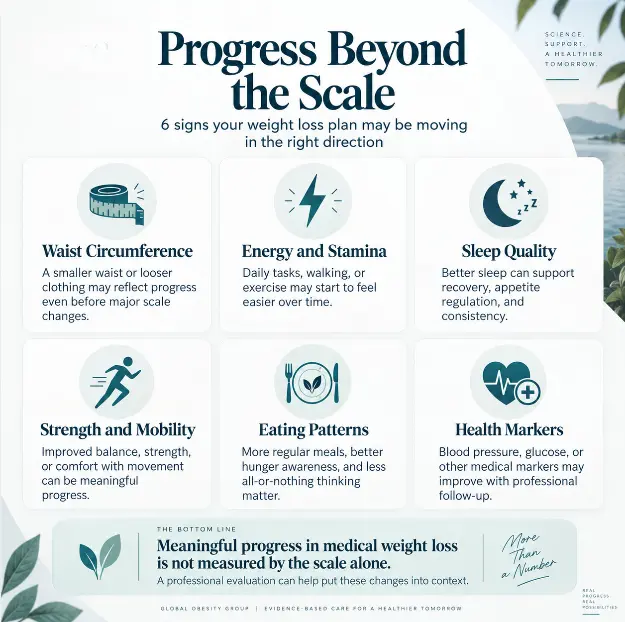
Progress also involves more than asking, “How many pounds did you lose?” Depending on the patient, we may need to consider symptoms, eating patterns, physical activity, adherence, changes in health, treatment tolerance, and other clinical factors.
Medical Weight Loss vs. Losing Weight on Your Own: What Actually Changes?
Trying to lose weight on your own does not mean you are doing something wrong. In fact, many people begin with reasonable steps: improving their diet, exercising more, tracking calories, following an app, or trying a plan that worked for someone they know.
The main difference with medical weight loss is not effort. It is the amount of information available to guide each decision.
When we compare medical weight loss vs. dieting on your own, we are really comparing general recommendations with a strategy that can be adapted to your health, history, response, and goals.
General advice can be helpful—but it is not always personal
Many people begin with apps, diets, online advice or exercise plans. The real question is not whether those tools exist, but whether they actually fit your health, your routine and your needs. That is where a more individualized approach begins.
Watching the Scale vs. Understanding What Your Progress Means
The number on the scale can be useful, but it does not tell the full story. Weight can fluctuate, and progress is not always linear.
Weight loss progress monitoring may also look at eating patterns, physical activity, symptoms, treatment tolerance, energy levels and other indicators that help explain how the plan is working.
Guessing What to Change vs. Having Professional Guidance
When progress slows, it is common to assume you need to eat less, exercise harder, or switch to a completely new method.
With professional weight loss support, the goal is to understand what may be contributing to the slowdown—such as routine changes, medications, sleep, symptoms or an overly restrictive plan— before making adjustments.
Short-Term Weight Loss vs. Building a Sustainable Strategy
Losing weight and maintaining that loss are related, but they are not exactly the same challenge. Very restrictive plans may produce results that are difficult to sustain in everyday life.
For us, sustainable weight loss means building a plan that can evolve over time. Long term weight management often requires flexibility, follow-up and habits that fit real life.
Why Can Weight Loss Be So Different from One Person to Another?
Two people can follow similar diets, perform similar exercises, and still experience very different results. That does not necessarily mean one person is more disciplined than the other.
Body weight is influenced by multiple interacting factors, which is why we do not expect one strategy to work identically for every patient.
When we evaluate weight, we do not look only at where you are today. We want to understand the experiences, health factors, habits and changes that may have shaped your journey over time.
Your Weight Has a History
Weight can change across different stages of life. Pregnancy, changes in work or family routines, illness, medications, stressful periods, physical activity, repeated dieting and previous weight-loss treatments can all become part of that history.
Some people have lost weight several times but struggled to maintain it. Others find that a strategy that worked years ago no longer produces the same response.
Medical and Metabolic Factors May Influence the Process
A professional evaluation helps us understand whether health-related factors may be influencing weight or making weight loss more difficult. This does not mean that every patient has an underlying disease—it means lifestyle should not automatically be considered the only factor.
A weight loss medical evaluation may include medical history, symptoms, medications, previous diagnoses and weight trajectory. When appropriate, a metabolic evaluation for weight loss may also help determine whether further assessment is needed.
Nutrition, Sleep, Movement and Daily Habits Matter Too
Weight management happens in everyday life. How and when you eat, how well you sleep, how much you move, your work schedule, family responsibilities, stress and even how meals are organized at home can affect how realistic a plan feels.
Nutrition counseling for weight loss can help identify eating patterns that may need adjustment while considering your health, preferences and routine.
Lifestyle support for weight loss can also help create realistic changes in movement, sleep, meal structure and daily habits without expecting you to redesign your entire life overnight.
Behavioral and Emotional Factors Can Also Affect Weight Management
Food is connected not only to calories, but also to routines, social situations, culture, emotions, rewards and learned behaviors.
For some people, stress may change eating patterns. Others may experience emotional eating, cycles of restrictive dieting followed by overeating, or difficulty recognizing hunger and fullness cues.
Behavioral support for weight loss can help identify patterns that may be making the process harder without assuming that weight gain is always emotional or placing blame on the patient.
What Can Be Part of a Medical Weight Loss Program?
There is no single formula for medical weight loss. At Global Obesity Group, we select the components of a treatment plan according to each patient’s health, weight history, goals, challenges, and response over time. What one person needs may be very different from what another needs.
Personalized Nutrition and Eating Habits
Nutrition is often an important part of treatment, but we do not believe in handing every patient the same diet.
A personalized nutrition plan should consider your health, food preferences, daily routine, eating patterns, goals, and what you can realistically maintain. Through nutrition counseling for weight loss, we can also identify habits that may need adjustment without turning food into a punishment or relying on unnecessarily restrictive rules.
Physical Activity That Fits Your Health and Current Abilities
Movement matters, but the right starting point is different for everyone.
We consider factors such as current fitness, mobility, previous injuries, health conditions, symptoms, and the stage of treatment. Exercise should support health and physical function—not become a way to “make up” for something you ate.
Behavioral and Emotional Support When It Is Needed
For some patients, eating patterns are also connected to stress, emotions, routines, triggers, or previous experiences with restrictive dieting.
When these factors are relevant, behavioral weight loss support can become part of the plan. The purpose of behavioral support for weight loss is not to assume that weight is caused by emotions, but to identify patterns that may be making long-term change more difficult.
Medical Evaluation and Ongoing Follow-Up
Medical follow-up gives us the opportunity to review more than weight alone. We can evaluate symptoms, medications, health conditions, treatment tolerance, progress, and obstacles that appear along the way.
That is a central part of medically supervised weight loss: the plan can be reviewed and modified instead of remaining fixed when your circumstances change.
Weight Loss Medications When They Are Medically Appropriate
Prescription medications can be one component of medical weight management, but they are not appropriate for everyone, and they do not replace nutrition, physical activity, or behavioral changes.
The U.S. National Institute of Diabetes and Digestive and Kidney Diseases (NIDDK) explains that healthcare professionals consider factors such as BMI, weight-related health problems, other medications, medical history, potential benefits, and possible side effects when deciding whether weight-management medication may be appropriate.
For us, this means medical weight loss treatments should be selected after an individual evaluation—not because a particular medication is popular or worked for someone else.
Bariatric Surgery When It Becomes an Appropriate Treatment Option
A medical weight loss program does not automatically lead to bariatric surgery. Metabolic and bariatric surgery is one option within the broader spectrum of obesity treatment, and it is considered for selected patients after evaluating factors such as obesity severity, associated health conditions, previous nonsurgical treatment, and the potential benefits and risks of surgery.
NIDDK identifies specific clinical circumstances in which metabolic and bariatric surgery may be considered and emphasizes that patients should understand the procedure, its risks and benefits, and the long-term changes required afterward.
That is why, within comprehensive obesity care, our goal is not to move every patient toward the same treatment. It is to understand which combination of nutrition, lifestyle changes, behavioral support, medical therapy, follow-up, or surgery makes sense for that individual.
| Medical weight loss may include | The key question |
|---|---|
|
🥗
Nutrition
|
What approach fits your health and daily life? |
|
🏃
Physical activity
|
What movement is appropriate for you now? |
|
💬
Behavioral support
|
Are there patterns that need additional support? |
|
🩺
Medical follow-up
|
How is your health responding to the plan? |
|
💊
Medication
|
Is it clinically appropriate for your situation? |
|
🏥
Bariatric surgery
|
Is surgery an appropriate treatment option for your profile? |
You Don’t Have to Navigate Medical Weight Loss Alone: Global Obesity Group’s Multidisciplinary Approach
At Global Obesity Group, we approach medical weight loss through a multidisciplinary team that can support different parts of your journey, including medical evaluation, nutrition, behavioral support, physical activity, follow-up, and bariatric surgery when appropriate. Our goal is to create personalized weight management that can evolve with your needs and support long term weight management.
You do not have to keep trying different strategies on your own. Sometimes, the most helpful next step is to understand your health and your options more clearly. Let’s start by understanding what you need and building a plan around you.

Frequently Asked Questions About Medical Weight Loss
What is medical weight loss?
Medical weight loss is a personalized approach to weight management that is guided by healthcare professionals. Instead of starting with a standard diet or one specific treatment, it begins by evaluating your health, weight history, habits, goals, and other factors that may influence your progress. The plan can then be adjusted according to how you respond over time.
How is medical weight loss different from dieting on my own?
The main difference is personalization and follow-up. When you are losing weight on your own, you may rely on general advice, apps, diets, or exercise plans designed for a broad audience. A medical weight loss program is built around your individual needs and can be reviewed and modified by professionals if your progress, health, or circumstances change.
Does medical weight loss always involve medication?
No. Medication is only one possible tool within medical weight management. Depending on the patient, treatment may include nutrition, physical activity, behavioral support, medical follow-up, medication, or other options. Weight-loss medication should only be considered when it is medically appropriate for the individual.
Do I need a doctor to lose weight?
Not everyone needs medical treatment to lose weight. However, medically supervised weight loss may be especially helpful if you have tried several approaches without lasting results, have health conditions related to weight, take medications that may affect weight, or are unsure which strategy is appropriate for you.
Why am I not losing weight even though I am eating better and exercising?
Weight loss can be influenced by more than food and exercise alone. Sleep, medical conditions, medications, metabolic factors, eating patterns, stress, activity levels, and previous weight-loss attempts may all play a role. A professional evaluation can help identify factors that may deserve closer attention instead of assuming that you simply need to try harder.
What happens if my weight loss stops or reaches a plateau?
A plateau does not automatically mean the plan has failed. With weight loss progress monitoring, professionals can review what has changed, how well the strategy fits your current routine, and whether nutrition, physical activity, medical treatment, or other parts of the plan need to be adjusted.
Can medical weight loss help me keep the weight off?
A key goal of long term weight management is to think beyond the initial weight-loss phase. Follow-up can help patients develop routines, eating patterns, activity habits, and treatment strategies that are more realistic to maintain over time. Sustainable weight loss is not about following a perfect plan forever, but about building an approach that can adapt as your needs change.
Is bariatric surgery part of medical weight loss?
It can be, but only for selected patients. Bariatric surgery is one option within the broader spectrum of obesity treatment and is not the automatic outcome of a medical weight-loss program. Whether surgery is appropriate depends on an individual medical evaluation, health status, weight-related conditions, previous treatments, and other clinical factors.
What professionals can be part of a medical weight loss team?
A multidisciplinary weight loss team may include physicians, nutrition professionals, behavioral or mental health professionals, physical activity specialists, and bariatric surgeons when needed. The specific professionals involved depend on the patient’s needs and treatment plan.
When should I consider professional weight loss support?
You may consider professional weight loss support if you have tried to lose weight several times, frequently regain weight, feel confused by conflicting advice, have health concerns related to your weight, or want to understand your treatment options more clearly. Seeking help does not mean you have failed on your own—it gives you an opportunity to understand what may be influencing your weight and build a more individualized strategy.
References
- National Institute of Diabetes and Digestive and Kidney Diseases. (n.d.). Prescription medications to treat overweight & obesity. National Institutes of Health.
- National Institute of Diabetes and Digestive and Kidney Diseases. (n.d.). Potential candidates for weight-loss surgery. National Institutes of Health.
The information provided in this article is intended for educational purposes only and should not be used as a diagnosis or as a substitute for personalized medical advice. Weight management and obesity treatment should be adapted to each person's health, medical history, needs, and goals. A professional evaluation is important before starting or changing any weight-loss treatment.