Bariatric Surgery in Bogotá: Gastric Sleeve, Gastric Bypass and Multidisciplinary Care
Global Obesity Group
A multidisciplinary team of specialists in Bogotá with extensive experience in the management of overweight, obesity, and metabolic surgery. This content is intended for educational purposes and does not replace a personalized medical evaluation.
If you are considering bariatric surgery in Bogotá, chances are this is not the first time you have tried to lose weight. You may have followed different diets, started exercising repeatedly, taken medication or seen the weight return after every attempt. You may also be dealing with diabetes, high blood pressure, sleep apnea, joint pain or other conditions that are affecting your health and quality of life. When weight loss becomes a constant physical and emotional struggle, you deserve more than another temporary solution.
At Global Obesity Group, we understand that weight loss surgery in Bogotá is not a cosmetic shortcut or an automatic answer. It is a medical tool that must be considered through a complete evaluation, careful preparation and long-term follow-up. Through our experience providing bariatric surgery in Colombia, we help each patient understand their options and determine whether surgery is appropriate for their individual needs. Our approach is based on comprehensive obesity treatment in Bogotá, combining specialized surgery with medical, nutritional and psychological support before, during and after the procedure.
Have you tried everything and still feel stuck?
You do not have to make this decision alone. Schedule a bariatric evaluation with Global Obesity Group and discover which medically guided treatment may be appropriate for your health, needs and weight-loss goals.
What is bariatric surgery, and why is it more than a weight loss procedure?
When patients ask us what is bariatric surgery, we explain that it is not simply a procedure designed to make the stomach smaller. It is a medical treatment for obesity that can help change how the body responds to food, hunger and fullness. Its purpose is not only to support weight loss, but also to improve health conditions that may be linked to excess weight.

Calculadora de IMC para mujeres: conoce tu resultado y qué significa para tu salud Contenido

Enfermedad que engorda: ¿Qué condiciones pueden hacerte subir de peso y cómo tratarlo? Contenido escrito

How Much Weight Will I Lose With Gastric Sleeve Calculator? Contenido escrito por Global Obesity
Una Solución a la Obesidad

When diet and exercise have not been enough, surgery may become a medical option
Many people who come to us have already tried multiple diets, exercise plans or medications. Their difficulty losing weight is not always a matter of willpower. Metabolic, hormonal, emotional and genetic factors can make obesity harder to manage, especially when conditions such as type 2 diabetes, high blood pressure, fatty liver disease or sleep apnea are also present.
In these cases, medical weight loss and bariatric surgery may be considered as part of a broader treatment plan. Surgery is not the first or only option for every patient, which is why we begin with a complete medical assessment.
How bariatric surgery changes the digestive system and supports long-term weight loss
Patients often want to know how does bariatric surgery work. The answer depends on the procedure, but bariatric surgery may reduce stomach capacity, help patients feel full of smaller portions and influence the hormonal signals involved in hunger and metabolism.
| What may change | How it may support the patient |
|---|---|
| Stomach capacity | Smaller portions may provide a greater feeling of fullness. |
| Hunger signals | Some procedures may influence hormones related to appetite and satiety. |
| Food intake | Patients gradually learn to eat smaller, more structured meals. |
| Nutrient absorption | Procedures such as gastric bypass may alter how some nutrients are absorbed. |
| Metabolic health | Weight loss may support improvements in certain obesity-related conditions. |
The potential benefits of bariatric surgery vary from person to person. They may include meaningful weight loss, improved mobility, better control of some metabolic conditions and a greater ability to participate in everyday activities.
Bariatric surgery is a tool, not a guarantee: why follow-up matters
Long-term weight loss after bariatric surgery does not depend on the procedure alone. Results are also influenced by the patient’s starting health, the type of surgery, nutrition, physical activity, emotional wellbeing and consistency with follow-up care.
- The operation can create an important opportunity for change, but the patient should not have to manage that change alone.
At Global Obesity Group, we combine surgical care with medical, nutritional and psychological support. This multidisciplinary follow-up helps patients adapt safely, protect their health and build habits that can support their results over time.
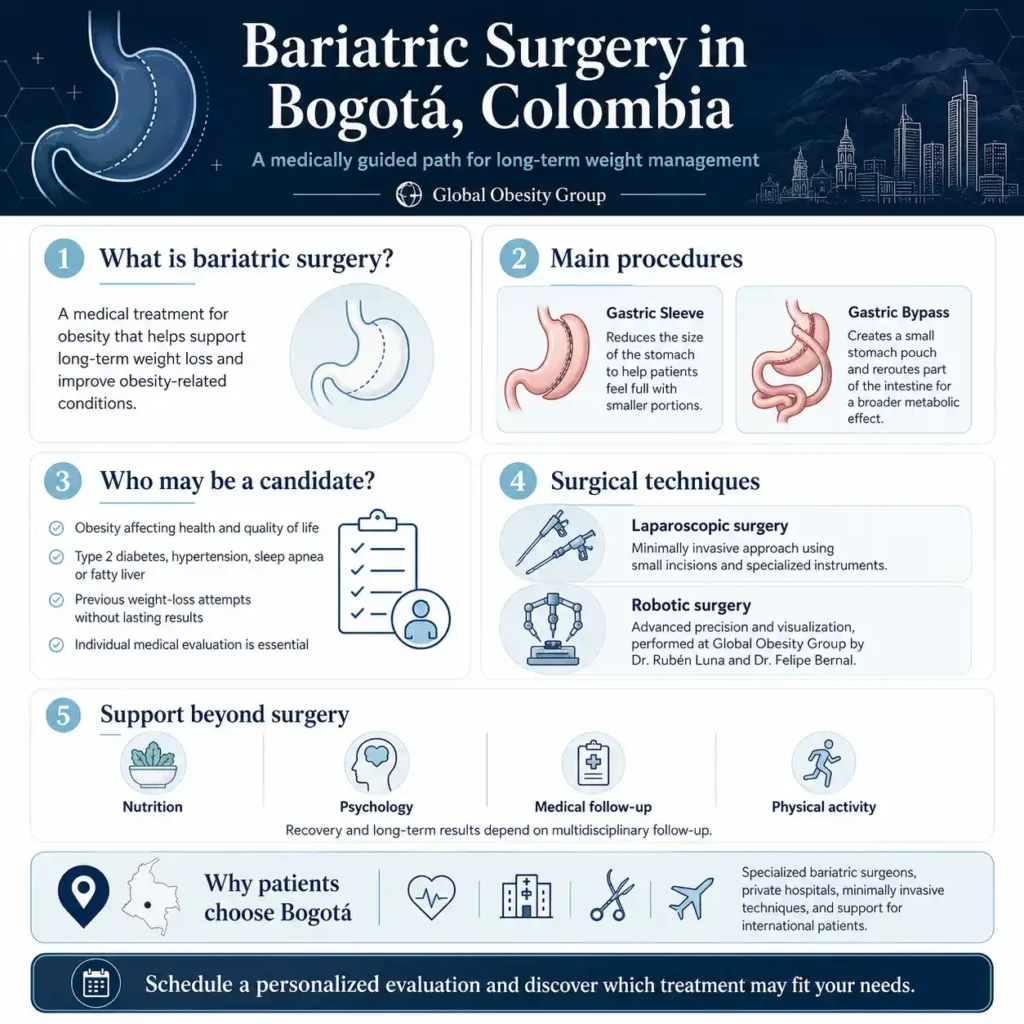
Could bariatric surgery be right for you, or should you consider another treatment first?
Deciding whether to undergo bariatric surgery is not simply a matter of reaching a certain number on the scale. When we evaluate bariatric surgery eligibility, we look at your weight, but we also consider how obesity is affecting your health, daily life and ability to achieve lasting results with previous treatments.
Your BMI matters, but it does not tell your whole health story
BMI is a useful screening tool, but it cannot explain your complete medical situation. Current international guidelines recommend metabolic and bariatric surgery for adults with a BMI of 35 or higher, regardless of whether they already have obesity-related conditions. Surgery may also be considered for some patients with a BMI between 30 and 34.9 who have metabolic disease or who have not achieved substantial and lasting improvement through nonsurgical treatment. These recommendations must always be interpreted through an individual medical assessment.
When discussing the BMI requirements for bariatric surgery, we also review:
- Your previous attempts to lose weight and how long the results lasted.
- Your medical history and current medications.
- Obesity-related conditions that may be affecting your health.
- Your eating patterns, emotional wellbeing and relationship with food.
- Your ability to follow nutritional and medical recommendations after surgery.
A BMI calculation can start the conversation, but it should never make the decision on its own.
Health conditions that may influence the decision to recommend surgery
Obesity can occur alongside type 2 diabetes, high blood pressure, obstructive sleep apnea, fatty liver disease, reflux, joint pain and reduced mobility. These conditions may influence whether surgery is appropriate and which procedure should be considered.
Patients frequently ask us who qualifies for gastric sleeve surgery or who qualifies for gastric bypass surgery. There is no single answer that applies to everyone. The severity of obesity, metabolic health, reflux symptoms, previous abdominal procedures, eating behaviors and nutritional needs can all influence the recommendation.
Why an individual medical evaluation is essential before choosing a procedure
A preoperative bariatric evaluation allows us to understand your health beyond your weight. It may involve surgical, medical, nutritional and psychological assessments, together with laboratory tests or additional studies according to your history.
Not every patient who wants to lose weight needs surgery. Some may benefit first from medication, nutritional treatment, psychological care or a structured multidisciplinary program. When you ask us which bariatric surgery is right for me, our responsibility is not to recommend the most popular procedure. It is to determine whether surgery is appropriate at all and, when it is, identify the option that best fits your needs.
Gastric sleeve surgery: could reducing stomach capacity help you regain control?
Gastric sleeve is one of the procedures we may consider for patients who need surgical support to manage obesity. However, choosing a gastric sleeve in Bogotá should begin with understanding what the operation changes, what it cannot do by itself and what life after surgery requires.
During a gastric sleeve procedure, the surgeon removes a large portion of the stomach and leaves a narrower, tube-shaped stomach. The intestines are not rerouted. Because the new stomach holds less food, patients usually feel satisfied with smaller portions. Removing part of the stomach may also affect signals involved in hunger, fullness and metabolism. The procedure is considered permanent because the removed portion cannot be restored.
Patients researching gastric sleeve surgery in Bogotá, gastric sleeve surgery in Colombia or a sleeve gastrectomy in Bogotá should understand that the goal is not simply to restrict food. The operation is intended to become part of a broader obesity treatment that includes nutrition, physical activity, medical care and behavioral change.
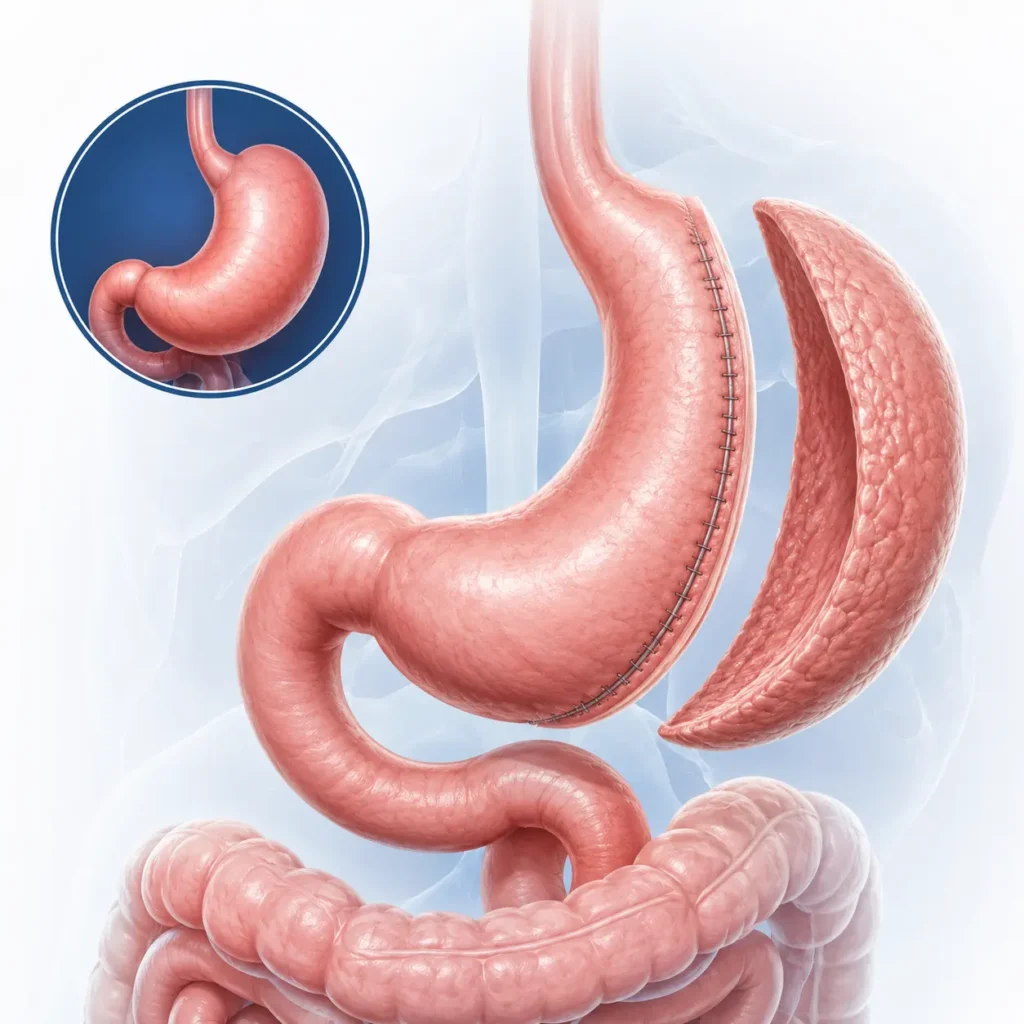
Why some patients may be considered for gastric sleeve surgery
A gastric sleeve may be evaluated for patients with obesity who have not achieved durable results through nonsurgical treatment and who are medically prepared for surgery. It may also be considered when avoiding an intestinal bypass is clinically preferable.
However, it is not automatically the best choice for everyone. Significant reflux, certain eating behaviors, previous procedures and other health conditions may lead the surgical team to consider a different option.
What you should know about recovery, nutrition and long-term changes
The gastric sleeve recovery time varies according to the patient, surgical approach and individual progress. Recovery involves more than allowing the incisions to heal. Patients must gradually move through different food consistency, learn to eat slowly, recognize fullness and meet hydration and protein goals.
Medical and nutritional follow-up helps us monitor:
- Hydration and food tolerance.
- Protein and nutrient intake.
- Vitamin or mineral needs.
- Changes in weight and metabolic health.
- Reflux, nausea or other symptoms.
- Emotional adjustment and lifestyle habits.
Benefits and limitations you should understand before deciding
Potential benefits may include meaningful weight loss, earlier fullness and improvement in some obesity-related conditions. The sleeve does not reroute the intestine and is generally less complex than gastric bypass. Still, it is a major operation with possible complications, nutritional deficiencies and the potential to cause or worsen acid reflux in some patients.
Understanding the gastric sleeve benefits and risks allows you to make a medically informed decision rather than choosing surgery only because it appears simpler or is frequently discussed online.
Gastric bypass surgery: when weight and metabolic conditions require a different approach
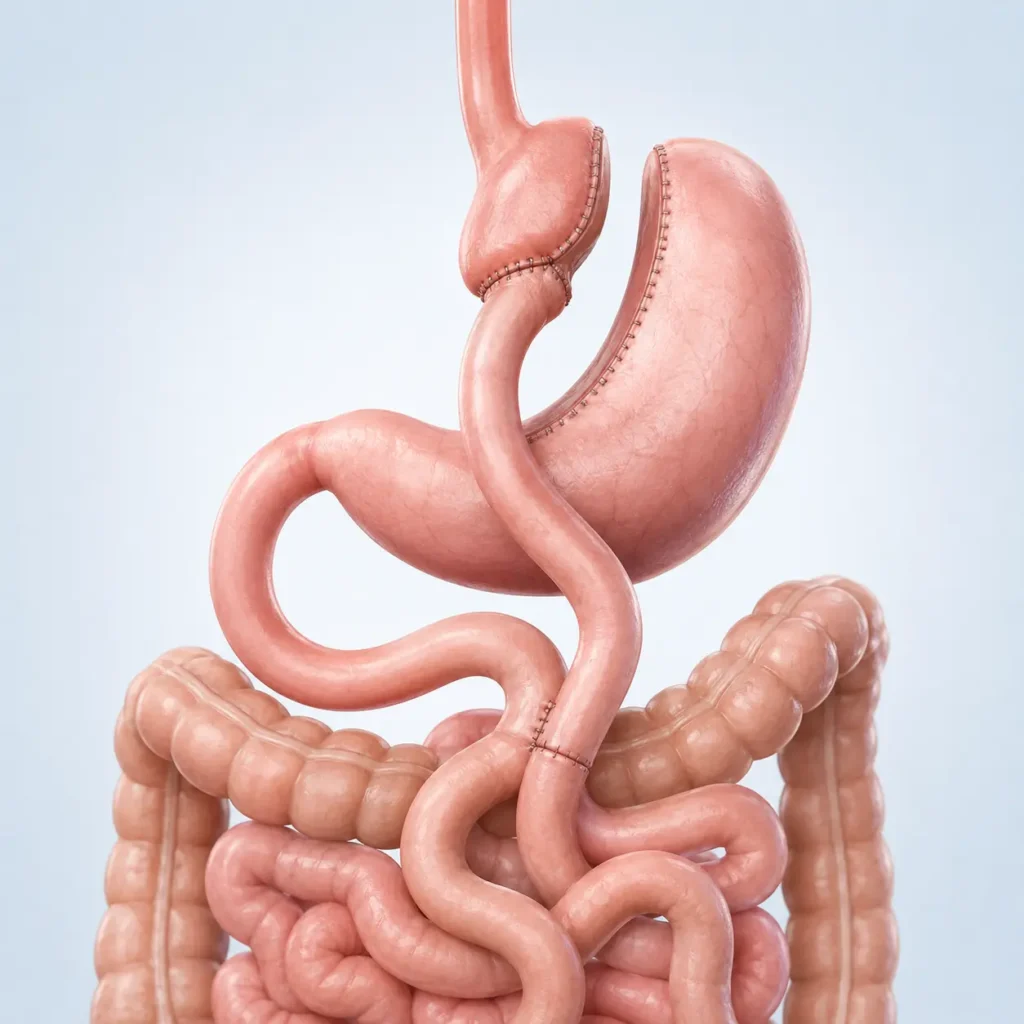
A gastric bypass in Bogotá may be considered when the patient’s weight, metabolic health, reflux symptoms or medical history suggest that reducing stomach capacity alone may not be the most appropriate strategy.
How Roux-en-Y gastric bypass changes the digestive route
During a gastric bypass procedure, the surgeon creates a small pouch from the upper portion of the stomach. This pouch is then connected to a lower section of the small intestine, allowing food to bypass most of the stomach and the first part of the intestine.
This new route limits the amount of food the stomach can hold, changes how some nutrients and calories are absorbed and influences gastrointestinal signals related to hunger, fullness and metabolism.
When patients search for gastric bypass surgery in Bogotá, gastric bypass surgery in Colombia or Roux-en-Y gastric bypass in Colombia, we encourage them to look beyond the technical description. The procedure requires a long-term commitment to nutrition, supplementation and medical monitoring.
When gastric bypass may be considered instead of gastric sleeve
Gastric bypass may be evaluated for some patients with severe obesity, significant gastroesophageal reflux or metabolic conditions such as type 2 diabetes. Its effects on gastrointestinal hormones and nutrient flow can provide important metabolic benefits, but the recommendation must be based on the patient’s complete clinical profile.
Although gastric bypass for type 2 diabetes can support substantial improvement in blood sugar control, no responsible medical team should promise remission or guarantee that medication will no longer be needed. Results vary, and diabetes must continue to be monitored.
Why vitamin supplementation and long-term monitoring become essential
Because food bypasses part of the digestive system, gastric bypass can increase the risk of vitamin and mineral deficiencies. Patients usually need prescribed supplementation, periodic blood tests and ongoing nutritional care.
The gastric bypass recovery time also includes adapting to smaller meals, a gradual food progression and new eating habits. Long-term follow-up helps identify deficiencies, digestive symptoms, inadequate intake or weight changes before they become more difficult to manage.
After gastric bypass, supplements and laboratory monitoring are not optional extras; they are part of the treatment.
Gastric bypass benefits and risks that should be discussed before surgery
Potential benefits include significant weight loss, metabolic improvement and better control of reflux in appropriately selected patients. However, gastric bypass is more complex than gastric sleeve and may involve risks such as bleeding, leakage, intestinal complications, dumping symptoms, ulcers and nutritional deficiencies.
Discussing the gastric bypass benefits and risks openly does not mean discouraging surgery. It means helping you enter the process with realistic expectations and a clear understanding of the follow-up it requires.
You may be interested How to Weigh Loss Fast: Gastric Balloon, Sleeve, Bypass, and Medical Care
Gastric sleeve vs gastric bypass: which procedure may better fit your health needs?
The question of gastric sleeve vs gastric bypass cannot be answered by choosing the procedure that appears most popular or produces the most dramatic testimonial. Both surgeries can be effective, but they change the digestive system differently and require different considerations.
The “best” procedure depends on your body, medical history and goals
When deciding between gastric sleeve or gastric bypass, we consider BMI, reflux, diabetes, eating patterns, previous abdominal surgery, nutritional risks and the ability to maintain long-term follow-up.
Gastric sleeve
Reduces the size of the stomach without rerouting the intestine.
Gastric bypass
Creates a small stomach pouch and reroutes part of the intestine.
| Factor to consider | Gastric sleeve | Gastric bypass |
|---|---|---|
| Main change | Reduces the size of the stomach | Creates a small pouch and reroutes part of the intestine |
| Intestinal rerouting | No | Yes |
| Nutrient absorption | Usually less affected | More significantly affected |
| Supplementation | Commonly required according to medical guidance | Essential and generally more extensive |
| Reflux | May appear or worsen in some patients | May improve in appropriately selected patients |
| Metabolic effect | Can support metabolic improvement | Often considered when a stronger metabolic effect is needed |
| Procedure complexity | Generally less complex | More complex |
| Long-term follow-up | Essential | Essential |
Reduces the size of the stomach.
Creates a small pouch and reroutes part of the intestine.
No.
Yes.
Usually less affected.
More significantly affected.
Commonly required according to medical guidance.
Essential and generally more extensive.
May appear or worsen in some patients.
May improve in appropriately selected patients.
Can support metabolic improvement.
May be considered when a stronger metabolic effect is needed.
Generally less complex.
More complex.
Essential.
Essential.
The table provides general guidance only. It cannot replace a surgical and multidisciplinary evaluation.
Weight loss, reflux, diabetes and nutrition: the differences that matter
May be appropriate for a patient who would benefit from reducing stomach capacity without rerouting the intestine.
May be considered when reflux or metabolic disease plays a more important role in the decision.
Neither procedure eliminates the need for healthy eating, physical activity or emotional support. Both require permanent changes and ongoing medical care.
What is the most successful bariatric surgery?
Patients often search for the most successful bariatric surgery, but success does not have one universal definition. It may mean sustainable weight loss, better diabetes control, improved mobility, less reflux or a better quality of life.
The best type of bariatric surgery is the one that offers a reasonable balance between expected benefits, surgical risk, metabolic needs and long-term sustainability for each patient.
The same applies to the safest bariatric surgery. Safety depends on the patient’s health, the experience of the surgical team, the hospital, the technique used and the quality of follow-up.
Why choosing the right procedure is more important than choosing the most popular one
The right procedure is not necessarily the one with the highest average weight-loss figure. It is the one that best fits the patient’s health, needs and ability to maintain long-term care.
At Global Obesity Group, we do not begin by trying to fit you into a particular surgery. We first evaluate your health and determine which bariatric surgery is right for me from an individualized medical perspective.
The procedure should adapt to your health needs—not the other way around.
Laparoscopic or robotic bariatric surgery: what changes for the patient?
Both laparoscopy and robotic-assisted surgery allow us to perform bariatric procedures through small abdominal incisions rather than one large opening. However, the instruments, visualization and way the surgeon controls them are different. When choosing between laparoscopic bariatric surgery in Bogotá and robotic bariatric surgery in Bogotá, we consider your anatomy, surgical history, procedure and individual needs—not technology alone.
Laparoscopic bariatric surgery uses small incisions and specialized instruments
During laparoscopic surgery, we introduce a high-definition camera and long, specialized instruments through small abdominal ports. The surgeon watches the procedure on a monitor and directly controls every instrument.
This is a well-established form of minimally invasive bariatric surgery that can be used to perform a laparoscopic gastric sleeve or laparoscopic gastric bypass. Compared with traditional open surgery, minimally invasive approaches are generally associated with less postoperative discomfort, shorter hospital stays and a more progressive return to everyday activities.
Robotic surgery gives the surgeon advanced control, precision and visualization
In robotic-assisted surgery, the robot does not make decisions or operate independently. The surgeon remains in control throughout the entire procedure, directing the robotic instruments from a console inside the operating room.
The system translates the surgeon’s hand movements into precise movements inside the patient and provides three-dimensional, high-definition visualization. These characteristics can be especially useful when working in confined spaces, performing delicate sutures or operating on patients with complex anatomy or previous abdominal surgery.
At our center, both robotic gastric sleeve surgery and robotic gastric bypass surgery are available for appropriately selected patients.
At Global Obesity Group, robotic bariatric surgery is performed by Dr. Rubén Luna and Dr. Felipe Bernal
Within Global Obesity Group, robotic bariatric surgery in Colombia is performed exclusively by Dr. Rubén Luna and Dr. Felipe Bernal. Both are trained and certified in the Da Vinci system and work together in our robotic bariatric program in Bogotá.
Our three-incision robotic approach is available for selected gastric sleeve, gastric bypass and revision procedures. Whether it is the right option for you can only be determined after reviewing your BMI, anatomy, previous procedures and overall health.
You may be interested Gastric Bypass in Bogotá, Colombia: A Complete Medical Journey with Global Obesity Group
Who performs bariatric surgery in Bogotá, and why does surgical experience matter?
Choosing among bariatric surgeons in Bogotá means looking beyond the number of procedures a doctor performs. You should feel confident in the surgeon’s training, experience, communication style and ability to work within a coordinated medical team.
At Global Obesity Group, every surgical recommendation is reviewed from more than one professional perspective. Our patients are not treated as isolated procedures; they are accompanied by people living with chronic and complex health condition.
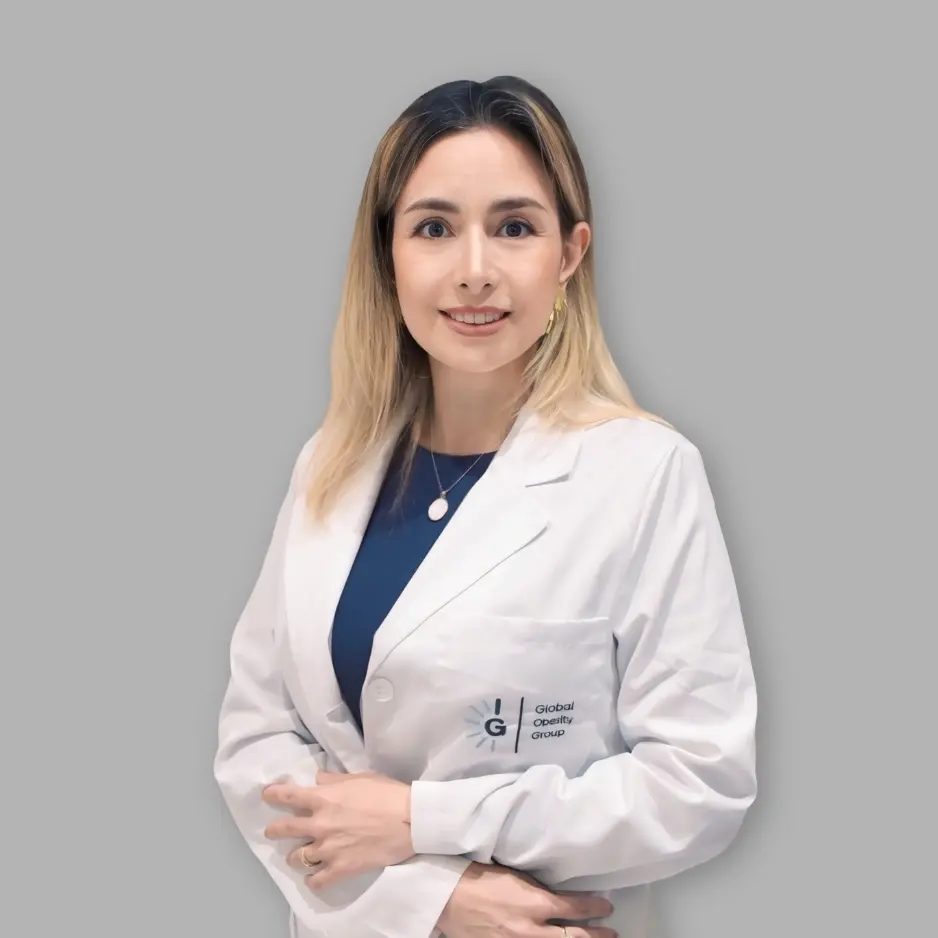
Dr. Carolina Rodríguez: bariatric surgery with a close and patient-centered approach
For patients looking for a female bariatric surgeon in Bogotá, Dr. Carolina Rodríguez brings more than 15 years of experience in minimally invasive and bariatric surgery. She trained in medicine at Universidad de La Sabana and completed General Surgery at FUCS, where she now serves as an associate professor. She is also a Fellow of the American College of Surgeons.
Her practice includes gastric sleeve, gastric bypass and advanced laparoscopic surgery. As a Dr. Carolina Rodríguez bariatric surgeon patient, you can expect a careful conversation about your health, previous attempts to lose weight and the changes you can realistically sustain after treatment.

Dr. Rubén Luna: experience in laparoscopic and robotic bariatric surgery
Dr. Rubén Luna is a general and bariatric surgeon with extensive experience in advanced laparoscopy and robotic surgery. He studied medicine at Universidad Nacional de Colombia, completed General Surgery at Universidad El Bosque and received advanced bariatric training at Instituto Gastro Obeso in São Paulo, Brazil.
As a pioneer of three-incision robotic bariatric surgery in Colombia, he combines surgical experience with Da Vinci Xi training and individualized clinical judgment. Patients searching for a Dr. Rubén Luna bariatric surgeon or a robotic bariatric surgeon in Colombia will find an approach built around precision, medical evaluation and multidisciplinary care.
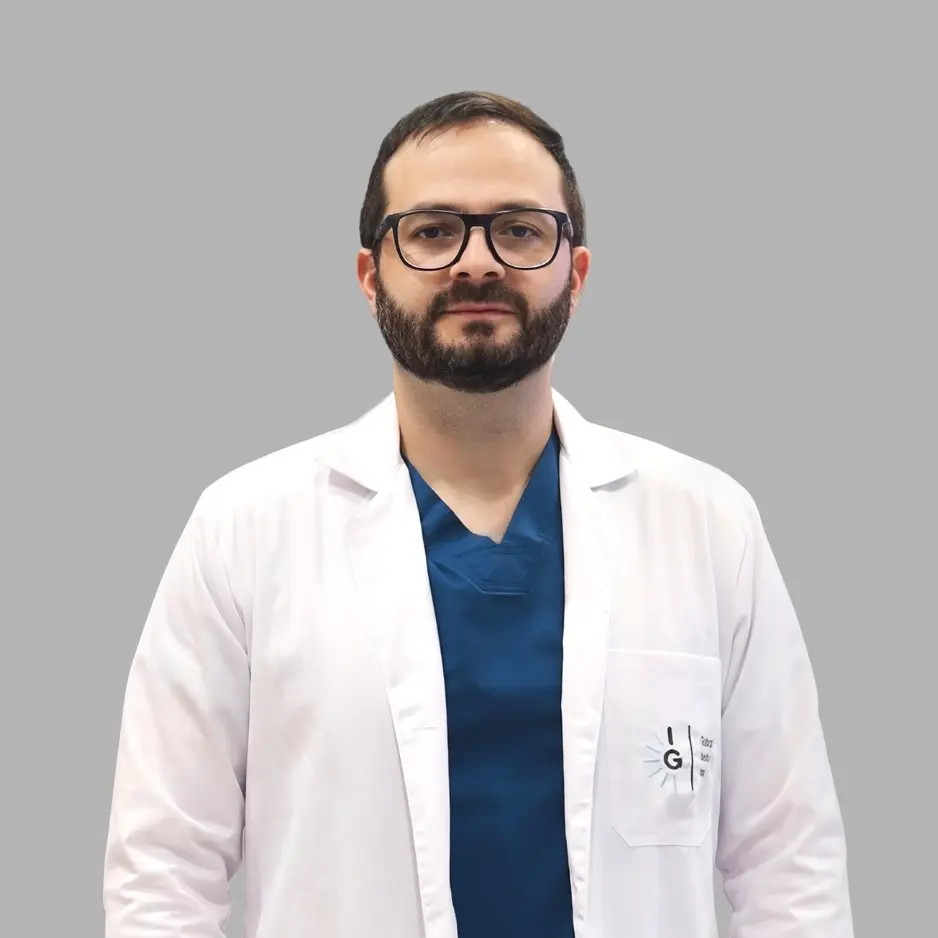
Dr. Felipe Bernal: advanced bariatric surgery and robotic surgical techniques
Dr. Felipe Bernal is a bariatric surgeon, co-founder of Global Obesity Group and a Da Vinci-certified robotic surgeon. He has more than 15 years of surgical experience and works with gastric sleeve, gastric bypass, advanced laparoscopy, robotic surgery and selected revision procedures.
He is an associate professor at Universidad El Bosque and leads a minimally invasive surgery research line within its surgical research group. The Dr. Felipe Bernal bariatric surgeon profile combines clinical practice, academic work and experience with complex surgical techniques.
Why the surgeon is supported by an entire multidisciplinary team
Even an experienced bariatric surgeon in Colombia should not work alone. Surgery changes the digestive system, but the patient must also adapt nutritionally, physically, medically and emotionally.
Our multidisciplinary bariatric surgery team includes professionals in:
- Bariatric and obesity medicine
- Nutrition
- Psychology
- Physical therapy
- Functional and general medicine
- Psychiatry, when clinically indicated
Every surgical patient is assessed before the operation and followed through a structured 12-month program. Local patients can attend in person, while international patients continue their appointments remotely after returning home.
Considering bariatric surgery abroad? Here is what international patients should evaluate
Looking for weight loss surgery abroad can feel overwhelming. You are not only choosing a surgeon and procedure—you are also planning flights, accommodation, medical records, recovery and follow-up from another country.
We believe that medical tourism for bariatric surgery should begin with clinical clarity, not with a plane ticket or an attractive price.
Why Bogotá is attracting patients looking for specialized obesity care
Bogotá offers access to specialized bariatric surgeons, private hospitals, multidisciplinary obesity care and laparoscopic and robotic surgical techniques. El Dorado International Airport also provides nonstop routes from several major cities in the United States and connections throughout the Americas.
These factors have made bariatric surgery in Colombia for international patients an option for people seeking specialized treatment outside their home country. At Global Obesity Group, patients are treated in private hospitals in Bogotá and can continue their follow-up remotely after returning home.
Your medical process should begin before you book a flight
Patients considering bariatric surgery in Bogotá for international patients should complete an initial medical evaluation before confirming their travel dates.
Virtual consultation
Your process begins with a private online consultation with our medical team.
Clinical review
We review your health history, weight changes, previous treatments and available medical results.
Personalized planning
After the review, we can provide a surgical plan and preoperative checklist.
This evaluation helps avoid traveling before eligibility, timing and clinical requirements are clear.
How long should you stay in Bogotá after bariatric surgery?
The required stay depends on the procedure, recovery and medical judgment. For many international patients, our current planning guidance is approximately five to seven nights, usually including hospital observation and several days of local recovery.
The stay may need to be extended for patients with a complex medical history, revision surgery or additional observation needs. Final travel clearance is always individualized.
Price matters, but it should never be the only reason to choose a clinic
Searching for affordable bariatric surgery in Colombia, the gastric sleeve cost in Colombia or the gastric bypass cost in Colombia is understandable. However, the lowest quote may not include everything required for safe and continuous care.
When comparing the bariatric surgery cost in Colombia, ask about the surgeon’s credentials, hospital, anesthesia, clinical team, preoperative studies, postoperative monitoring and how unexpected medical needs are handled.
What should a bariatric surgery package include?
When reviewing bariatric surgery packages in Colombia, confirm what is included and what must be paid separately.
| Area to confirm | Questions worth asking |
|---|---|
| Medical care | Are the surgeon, anesthesiologist and hospital fees included? |
| Preoperative process | Which tests and consultations are included? |
| Hospital stay | How many nights are covered? |
| Follow-up | How long will the surgical, nutritional and psychological team follow me? |
| Accommodation | Is the hotel included or billed separately? |
| Transportation | Are airport and hospital transfers available? |
| Additional needs | How are extra tests, medications or unexpected care handled? |
At Global Obesity Group, our international process includes a virtual consultation, personalized quote, coordinated surgery and a 12-month remote follow-up program. Accommodation at our partner hotel is arranged at a preferential rate but billed separately, so patients receive a clear distinction between surgical and travel expenses.
Before you travel to Colombia for bariatric surgery, make sure you understand who will operate, where the procedure will take place and who will continue supporting you once you return home.
Global Obesity Group: multidisciplinary support before, during and after bariatric surgery
At Global Obesity Group, we are a bariatric clinic in Bogotá dedicated to the specialized care of people living with overweight and obesity. Our team brings together bariatric surgery specialists in Colombia and professionals in nutrition, psychology, medicine and physical activity, allowing us to provide multidisciplinary bariatric care before and after surgery. We perform gastric sleeve and gastric bypass procedures according to each patient’s health, medical history and goals—not according to a one-size-fits-all formula.
For patients traveling from abroad, our English-speaking bariatric clinic in Colombia offers an initial online bariatric surgery consultation, medical guidance before booking a flight and support with the planning of their stay. Through a virtual bariatric consultation Colombia patients can share their medical history, understand possible treatment options and receive a personalized preoperative plan. If you are considering bariatric surgery in Bogotá, let us listen to your story, answer your questions and help you take the next step with greater confidence.

Frequently asked questions about bariatric surgery in Bogotá
1. How do I know if I qualify for bariatric surgery?
Eligibility is not determined by weight alone. During a preoperative bariatric evaluation, we review your BMI, medical history, obesity-related conditions, previous weight-loss attempts, eating patterns and emotional wellbeing. Surgery may be considered when obesity is affecting your health and nonsurgical treatments have not produced sufficient or lasting improvement. The final recommendation must always be personalized.
2. What are the BMI requirements for bariatric surgery?
The BMI requirements for bariatric surgery are used as clinical guidance, but BMI does not tell your entire health story. Some patients may be considered for surgery because of severe obesity, while others may qualify at a lower BMI when they also have metabolic conditions such as type 2 diabetes. We evaluate BMI together with your symptoms, medical conditions and treatment history before recommending surgery.
3. How do I choose between gastric sleeve and gastric bypass?
The decision between gastric sleeve or gastric bypass depends on factors such as reflux, diabetes, BMI, eating patterns, nutritional risks and previous abdominal surgery. Gastric sleeves reduce the size of the stomach without rerouting the intestine, while gastric bypass creates a smaller stomach pouch and changes the digestive route. Neither procedure is automatically better for everyone.
4. What is the most successful bariatric surgery?
There is no single most successful bariatric surgery for every patient. Success may mean sustainable weight loss, improved diabetes control, greater mobility, less reflux or a better quality of life. The best type of bariatric surgery is the procedure that provides an appropriate balance of benefits, risks and long-term sustainability for your individual health needs.
5. Is robotic bariatric surgery better than laparoscopic surgery?
Both techniques are forms of minimally invasive bariatric surgery. Laparoscopy uses a camera and specialized instruments controlled directly by the surgeon, while robotic surgery provides three-dimensional visualization and articulated instruments controlled from a surgical console. In the comparison of robotic vs laparoscopic bariatric surgery, neither technique is always superior. The recommendation depends on the procedure, anatomy, complexity and surgeon’s clinical judgment.
6. Who performs robotic bariatric surgery at Global Obesity Group?
Within Global Obesity Group, robotic bariatric surgery in Bogotá is performed exclusively by Dr. Rubén Luna and Dr. Felipe Bernal. The robotic system does not operate independently; the surgeon controls every movement throughout the procedure. Dr. Carolina Rodríguez performs gastric sleeve, gastric bypass and advanced laparoscopic bariatric procedures.
7. How long does recovery take after bariatric surgery?
Bariatric surgery recovery varies depending on the procedure, surgical technique, health conditions and individual progress. During the first days, patients may experience discomfort, fatigue or nausea and are encouraged to begin walking carefully. Recovery also includes progressing through different food stages, meeting hydration and protein goals and attending postoperative appointments. Your medical team will determine when you can return to work, exercise and regular activities.
8. Can I regain weight after gastric sleeve or gastric bypass?
Some degree of weight regain can occur after either procedure. This may be related to eating patterns, emotional factors, hormonal changes, medication, reduced physical activity or anatomical changes. It does not automatically mean that the operation failed. Our bariatric surgery follow-up program helps identify possible causes and determine whether nutritional care, psychological support, medication or another intervention may be appropriate.
9. How long should an international patient stay in Bogotá?
For many international patients, we generally recommend planning approximately five to seven nights in Bogotá. This period usually includes hospital observation and several days of local recovery before traveling home. Patients with complex medical histories or revision procedures may need to stay longer. Final travel clearance is always based on the individual recovery process.
10. Can I begin the process before traveling to Colombia?
Yes. Patients considering bariatric surgery in Colombia for international patients can begin through an online bariatric surgery consultation. We review your medical and surgical history, BMI, obesity-related conditions, previous treatments and available test results before travel is confirmed. If surgery may be appropriate, we provide initial guidance, a personalized plan and a preoperative checklist. After returning home, international patients can continue their medical, nutritional and psychological follow-up remotely.
Referencias
- Eisenberg, D., Shikora, S. A., Aarts, E., Aminian, A., Angrisani, L., Cohen, R. V., De Luca, M., Faria, S. L., Goodpaster, K. P. S., Haddad, A., Himpens, J. M., Kow, L., Kurian, M., Loi, K., Mahawar, K., Nimeri, A., O’Kane, M., Papasavas, P. K., Ponce, J., … Kothari, S. N. (2022). 2022 American Society for Metabolic and Bariatric Surgery and International Federation for the Surgery of Obesity and Metabolic Disorders: Indications for metabolic and bariatric surgery. Surgery for Obesity and Related Diseases, 18(12), 1345–1356.
- National Institute of Diabetes and Digestive and Kidney Diseases. (n.d.). Types of weight-loss surgery. National Institutes of Health
- American Society for Metabolic and Bariatric Surgery. (n.d.). Bariatric surgery procedures.
- American Society for Metabolic and Bariatric Surgery. (2021, febrero). Life after bariatric surgery