Weight Loss Doctors: What Each Specialist Does for You
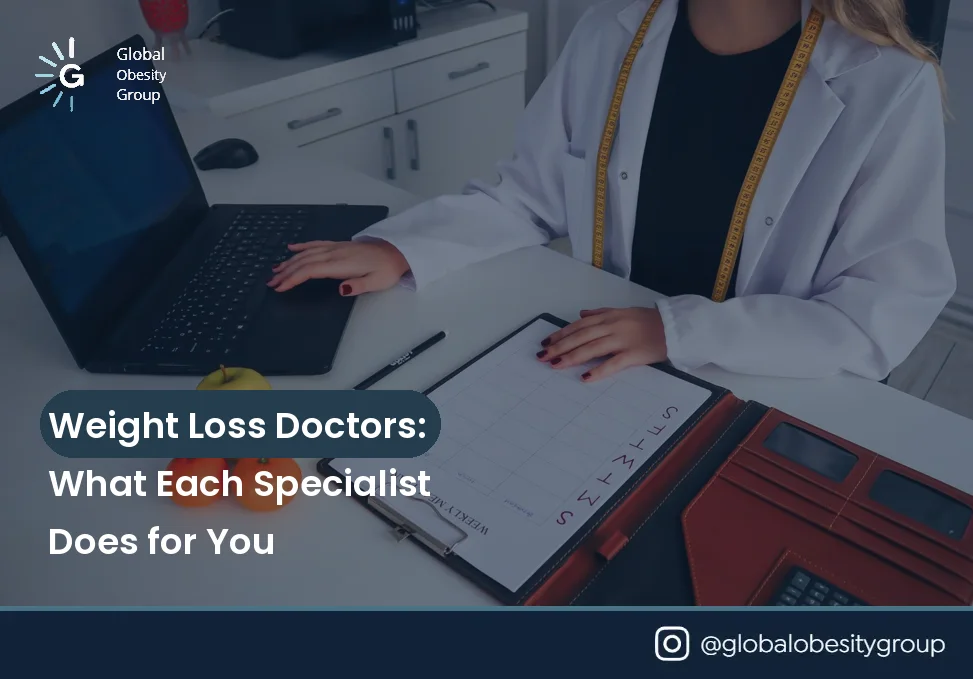
Dra. Paola Sánchez
Obesity Medicine Director at Global Obesity Group in Bogotá, Colombia, and architect of Método 4 PRO. 12+ years treating obesity and 2,000+ patients, including international patients in English. This article is educational and does not replace an individual medical evaluation.
Weight loss doctors are not one kind of doctor, and no single one can do everything. If your weight is affecting your health, the safest care comes from a coordinated team: a bariatric surgeon if surgery is an option, an obesity medicine doctor who manages your medical track, and specialists in hormones, nutrition, mental health and movement.
I am Dra. Paola Sánchez, and I lead the medical side of obesity care at Global Obesity Group in Bogotá. Below I explain what each of the 15 specialists on our team does, when you would see them, and how to check their credentials from home. If you want to see everyone’s full profile, it is on our medical team page.
What kind of doctor helps with weight loss?
Several kinds, and they work best together. A bariatric surgeon decides whether surgery is right for you and performs it. An obesity medicine doctor treats obesity as a chronic condition with or without surgery, and an endocrinologist checks for hormone problems. A dietitian, a psychologist and a physical therapist help you change how you eat, how you relate to food and how you move.
Which doctor should you see first if you want to lose weight?
The right first doctor depends on your BMI, your health conditions and what you have already tried. You do not need to work this out alone: in our virtual consultation we review your case across the surgical and the medical track before recommending anything.
Many patients arrive sure they need surgery and leave with a medical plan instead. Others think they can avoid surgery and learn why a sleeve or a bypass is the better call for them. In my own practice, about two thirds of the patients I see are not surgical candidates. That is why I never assume the answer before the evaluation.
Weight Loss Doctors: What Each Specialist Does for You Written by Dra. Paola Sánchez Obesity
BMI Requirements for Bariatric Surgery: When Is Gastric Sleeve or Bypass an Option? Medically Informed
Fat Loss Treatment: Understanding Your Options for Long-Term Weight Loss Written by Global Obesity Group
A Solution to Obesity

Your situation and who usually starts
A guide for your first conversation, not a diagnosis.
| Your situation | Who usually starts | Why |
|---|---|---|
| BMI 35 or higher, or 30 to 34.9 with type 2 diabetes or another metabolic disease | Bariatric surgeon and obesity medicine doctor | Surgery may be an option, and both evaluate you before anything is scheduled. |
| BMI under 35 without major health conditions | Obesity medicine doctor | A medical program, with or without medication, is usually the first step. |
| Weight gain with fatigue, irregular periods or thyroid symptoms | Endocrinologist | A hormone problem may be part of the picture. |
| You eat when stressed or feel out of control around food | Psychologist | Emotional eating is treated, not just “resisted”. |
| You already had surgery and are regaining weight | Obesity medicine doctor and your surgeon | Regain has causes that can be found and treated. |
Bariatric surgeon and obesity medicine doctor
Surgery may be an option, and both evaluate you before anything is scheduled.
Obesity medicine doctor
A medical program, with or without medication, is usually the first step.
Endocrinologist
A hormone problem may be part of the picture.
Psychologist
Emotional eating is treated, not just “resisted”.
Obesity medicine doctor and your surgeon
Regain has causes that can be found and treated.
Not sure where you fit? In the virtual consultation we review your case across the surgical and the medical track before recommending anything.
Surgical thresholds: ASMBS/IFSO 2022 guidelines.
The surgical thresholds in the first row come from the current international guidelines, which lowered the old cut-offs in 2022 (Eisenberg et al., 2022). If you are not sure where you stand, our BMI requirements guide explains each case.
What does a bariatric surgeon decide, and when is surgery on the table?
A bariatric surgeon decides whether your body and your health history make surgery a safe option, which procedure fits you (gastric sleeve or gastric bypass) and how it should be done. The surgeon also handles any surgical problem that appears afterwards, and a revision if one is ever needed.
What the surgeon does not do alone is decide that you are ready. At GOG, all four doctors who lead your case evaluate you before an operation is scheduled. Our three surgeons operate at Clínica Shaio, Country Hospital and Clínica Colsubsidio Calle 100, three private hospitals in Bogotá.
Dra. Carolina Rodríguez
Fellow of the American College of Surgeons (FACS). 15+ years in minimally invasive bariatric surgery.
View full profile →Dr. Felipe Bernal
Da Vinci certified robotic bariatric surgeon. 15+ years and 5,000+ patients.
View full profile →Dr. Rubén Luna
20+ years and 2,000+ bariatric procedures. Pioneer of 3-incision Da Vinci robotic bariatric surgery in Colombia.
View full profile →If you are comparing procedures, start with our pages on the gastric sleeve and the gastric bypass.
In a private 45–50 minute video call, in English, we review your case and tell you where to start.
What is an obesity medicine doctor, and how is it different from your family doctor?
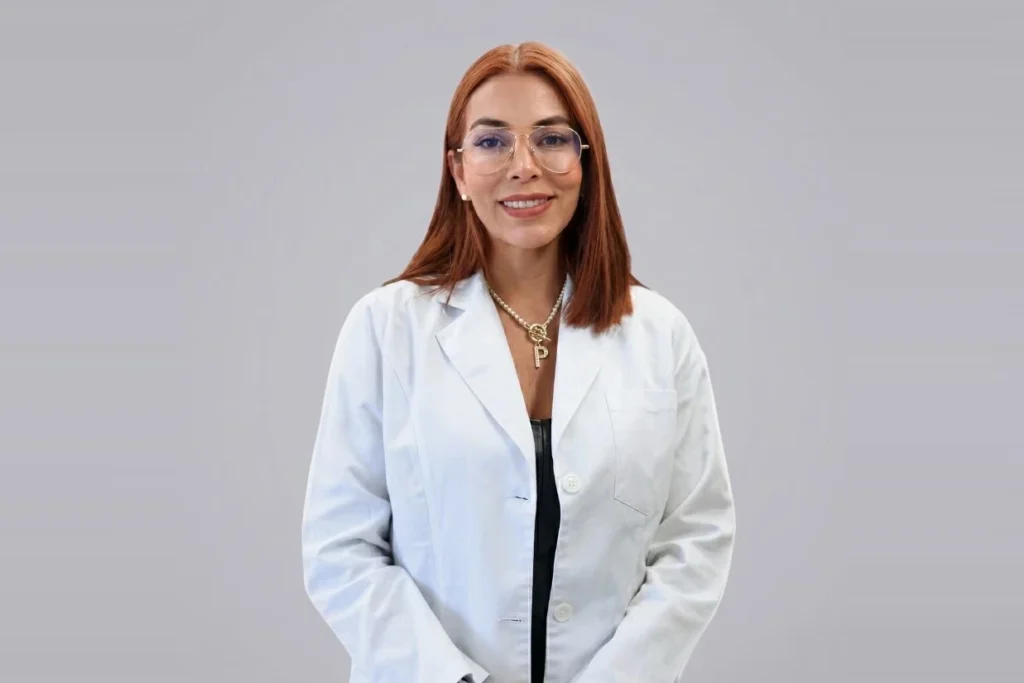
An obesity medicine doctor (sometimes called a bariatrician in the US) is a physician who treats obesity as a chronic disease, the same way another doctor would treat diabetes or high blood pressure. Your family doctor treats everything; my job is to treat this one condition in depth, whether you have surgery or not.
That means three things in practice. If you do not need surgery, I lead your treatment through Método 4 PRO, the program I designed around nutrition, psychology, physical therapy and hormonal health, with or without GLP-1 medication. If you are heading into surgery, I prepare you for it: pre-op nutrition, medical clearance and getting conditions like high blood sugar under control first. And after surgery, I lead the 12-month follow-up program.
Do you also need an endocrinologist?
You need an endocrinologist when a hormone or metabolic problem may be making it harder to lose weight, or when you already have one, such as type 2 diabetes, thyroid disease or polycystic ovary syndrome. Our endocrinologist, Dra. Lina Marulanda, checks your metabolic status, diagnoses and treats those conditions, and rules out the less common medical causes of weight gain.
Not every weight problem is hormonal, and a good evaluation tells you which part is and which part is not. For children and teenagers, our team also includes a pediatrician, Dra. Lina Robayo.
How does a dietitian help before and after surgery?

A dietitian (in Colombia, a nutritionist) turns medical goals into meals you can actually live with. Before surgery, that means a pre-op eating plan. After surgery, it means guiding you through each stage, from liquids to solid food, and making sure you get enough protein and nutrients from a much smaller stomach.
The international guidelines recommend that every patient have a nutrition evaluation before bariatric surgery and continued nutrition follow-up after it (Mechanick et al., 2020). At GOG, our nutritionists Dra. Viviana Rincón and Adriana Bautista see you before the operation and again at scheduled visits through the first year, by video if you live abroad.
Will the psychological evaluation decide whether you can have surgery?

The psychological evaluation is there to prepare you for surgery, not to screen you out. A psychologist looks at how you eat, how you handle stress, the support you have at home and anything that could make the months after surgery harder, then gives you and the team recommendations (Sogg et al., 2016).
Sometimes those recommendations include extra support before surgery, for example working on binge eating or emotional eating first. That is not a rejection. Your relationship with food does not change on the operating table, and the habits you build with our psychologists, Angela Romero and Dayanna Infante, are a big part of what you keep long term.
If you are living with depression, anxiety or another mental health condition that needs medical treatment, our psychiatrist, Dr. Diego Fonseca, works with the rest of the team. His role is to keep that condition stable and adjust any medication before and after surgery.
Why does a physical therapist join your team?

A physical therapist designs movement that fits your body as it is now, not the body a generic workout plan assumes. That matters if you have joint pain, if you have not exercised in years, or if you are recovering from surgery and need to know what is safe each week.
Our physical therapists, Diana Herrera and Ximena Mora, adapt the plan to your body composition and adjust it as you lose weight. The goal is to protect your muscle and your joints while you lose weight, and to build activity into your routine at a pace you can keep.
Who checks your labs, vitamins and hormones over time?

During the 12-month follow-up, I check your labs, your supplements and your weight trend, together with our endocrinologist when hormones are involved. After a sleeve or a bypass, your body absorbs some vitamins and minerals differently, so the guidelines recommend lifelong supplements and regular blood tests (Mechanick et al., 2020).
Two more doctors complete this part of the team. Dra. Adriana Aguirre (functional medicine) looks at how different systems in your body, such as metabolism, digestion and sleep, respond at each stage of treatment. Dra. Andrea Mayorga (general medicine) supports your general medical care within the program.
How do all these specialists work as one team for 12 months?

They share one case file and one plan, instead of separate appointments in separate offices. Every surgical patient is seen by our nutrition, psychology and physical therapy teams before the operation, and again at scheduled points during the first year. If you live abroad, you see the same team by video.
- 1. Virtual consultation (from home): 45–50 minutes, in English. We review your history, recent weight changes and previous attempts, and you leave with a written plan.
- 2. Evaluation before surgery: all four lead doctors evaluate you. Nutrition, psychology and physical therapy see you before the date is set.
- 3. Surgery in Bogotá: at one of our three private hospitals, with your surgeon.
- 4. First week and first month: my first follow-up visits, with nutrition guiding each eating stage.
- 5. Months 3, 6 and 12: labs, supplements, weight trend and adjustments with the whole team, by video if you are back home.
Dra. Adriana Aguirre
Dra. Andrea Mayorga
Dra. Viviana Rincón
Adriana Bautista
Angela Romero
Dayanna Infante
Diana Herrera
Ximena Mora
Dr. Diego Fonseca
Dra. Lina Robayo
This structure is the reason I do not see surgery as the end of treatment. Surgery is one step. The program around it is what helps you keep the result.
How can you check a surgeon's credentials from another country?
You can check every doctor’s qualifications yourself, online, before you book a flight. Ask for the doctor’s full name and specialty, then confirm it in the public records below. A serious clinic will give you this information without hesitation.
Check a weight loss doctor before you travel
Five things you can confirm online from home.
Use this list to organize your questions for the consultation.
Bring these questions to your virtual consultation. A serious clinic will answer each one without hesitation.
Schedule Your Virtual ConsultationTalk to us by video, ask every question on this list and see who would follow your case.
Meet our weight loss team in Bogotá, Colombia
The best weight loss doctors for you are the ones who look at your whole case before recommending anything, and who stay with you after the procedure. At Global Obesity Group, that means 15 specialists, three private hospitals and a 12-month program that you can follow from home.
If you are researching where to get treated, start with a conversation. In the virtual consultation we review your history, answer your questions about the team and tell you honestly whether surgery, a medical program or neither is the right next step.
Your Virtual Consultation with the Team
Living in the United States or another country? You can begin exploring your treatment options without traveling to Colombia. During your virtual consultation, our team takes the time to understand your health and guide you through the next steps.
What will we discuss during your consultation?
What your BMI may mean for bariatric surgery consideration.
Existing health conditions and important clinical information.
Treatments you've tried and how your body has responded.
Personalized guidance and possible treatment options.
Want to know who would follow your case? We tell you which specialists you would see, which visits happen in Bogotá and which ones continue by video once you are back home.
You don't have to figure it all out on your own.
Bring your questions, concerns, and goals. We're here to listen, help you understand your options, and guide you toward a decision that feels right for you.
Schedule My Virtual ConsultationFrequently Asked Questions About Your Weight Loss Team
Is a bariatrician the same as a bariatric surgeon?
No: a bariatrician is a medical doctor who treats obesity without operating, while a bariatric surgeon performs weight loss surgery. In a good program, the two work together, before and after surgery.
Do I need to see every specialist?
Surgical patients see the whole core team (the lead doctors, nutrition, psychology and physical therapy) because each one prepares a different part of the process. If you are on the non-surgical track, your plan includes only the specialists your case needs.
Can I meet the team online before traveling to Colombia?
Yes, you start with a private 45–50 minute video consultation in English, before you book anything. International patients also do their follow-up with the same team by video after returning home.
Are Colombian bariatric surgeons board-certified in the US?
US board certification is granted to surgeons trained in the US system, so Colombian surgeons are certified through Colombia’s own specialty training and national registry instead. What you can verify is their license and specialty in ReTHUS and international credentials such as FACS, which Dra. Carolina Rodríguez holds.
Can my doctor at home keep following me after surgery?
Yes, your local doctor can keep seeing you in person and ordering labs. Your 12-month follow-up with our team continues by video at the same time.
References
- Eisenberg, D., Shikora, S. A., Aarts, E., Aminian, A., Angrisani, L., Cohen, R. V., De Luca, M., Faria, S. L., Goodpaster, K. P. S., Haddad, A., Himpens, J. M., Kow, L., Kurian, M., Loi, K., Mahawar, K., Nimeri, A., O’Kane, M., Papasavas, P. K., Ponce, J., … Kothari, S. N. (2022). 2022 American Society for Metabolic and Bariatric Surgery (ASMBS) and International Federation for the Surgery of Obesity and Metabolic Disorders (IFSO): Indications for metabolic and bariatric surgery. Surgery for Obesity and Related Diseases, 18(12), 1345–1356.
- Mechanick, J. I., Apovian, C., Brethauer, S., Garvey, W. T., Joffe, A. M., Kim, J., Kushner, R. F., Lindquist, R., Pessah-Pollack, R., Seger, J., Urman, R. D., Adams, S., Cleek, J. B., Correa, R., Figaro, M. K., Flanders, K., Grams, J., Hurley, D. L., Kothari, S., Seger, M. V., & Still, C. D. (2020). Clinical practice guidelines for the perioperative nutrition, metabolic, and nonsurgical support of patients undergoing bariatric procedures – 2019 update. Surgery for Obesity and Related Diseases, 16(2), 175–247.
- Sogg, S., Lauretti, J., & West-Smith, L. (2016). Recommendations for the presurgical psychosocial evaluation of bariatric surgery patients. Surgery for Obesity and Related Diseases, 12(4), 731–749.